Making Good Things Happen


A blog that informs our clients about real world topics related to what we do as Scale Strategic Solutions!

The Youth Risk Behavior Survey/ Youth Tobacco Survey in Ohio

Understanding the needs and behaviors of youth is crucial in crafting policies and programs that support their growth and development. In Ohio and nationally, the Youth Risk Behavior Survey (YRBS) /Youth Tobacco Survey (YTS) serve as tools for gaining insights into the lives of Ohio's young population. Scale Strategic Solutions, in collaboration with Strategic Research Group and the Ohio Department of Health, is working with randomly selected schools to engage youth in the 2023 YRBS/YTS Study. These surveys provide data that inform the creation of statewide policies, programs, and initiatives aimed at better supporting the needs of Ohio's youth.


Data for Informed Decision-Making

One of the strengths of the YRBS/YTS in Ohio is its ability to provide a comprehensive view of youth behaviors. These reports are organized by topic, and the data are further broken down by demographic factors such as sex, grade, race, and ethnicity. This granularity enables researchers, policymakers, and advocates to pinpoint which groups are more at risk for certain health behaviors across the state.


For instance, the data reveal that in Ohio, significantly more high school females (31.7%) than males (12.3%) reported seriously considering a suicide attempt in the 12 months preceding the survey administered in 2021.  As we highlighted suicide prevention in September, this insight is helpful when tailoring suicide prevention initiatives or educational programs to address the specific needs of youth.


National Comparisons for a Broader Perspective

The beauty of YRBS/YTS is that it's not limited to Ohio. This survey is conducted nationally, and this means that we can compare Ohio's data to that of the entire United States. The CDC’s Youth Online data analysis tool makes these comparisons easy. Data comparisons may be retrieved at https://www.cdc.gov/healthyyouth/data/yrbs/results.htm.


For example, Ohio had a higher percentage of students who reported being bullied on school property than the national average in the 2021 survey. It is through these comparisons that Ohio can identify areas where the state may redouble its efforts to ensure youth health and safety.


Trends Over Time

The YRBS/YTS is administered every two years. If enough selected schools agree to participate in the study, Ohio can have the trend data it needs to inform policy. Between 2011 and 2013, the percentage of high school students who reported feeling sad or hopeless almost every day for 2 or more weeks went from 27.1% to 25.85. However, between 2019-2021 the percentages went from 33% to 42.6% Data are not available for 2015 and 2017 for a contiguous trend over time. Ohio hopes not to interrupt the availability of data in the future because of lack of school and youth participation.


The Youth Risk Behavior Survey and Youth Tobacco Survey offer a rich view of the healthy and unhealthy behaviors among Ohio's youth. By leveraging these insights, Ohio is better equipped to create effective programs, measure their success, and secure the funding needed to make a positive impact on the lives of its young residents.


Note: This article was written by Scale Strategic Solutions staff with assistance with prose from artificial intelligence. Data references were selected by staff.


By m.staples87 April 28, 2026
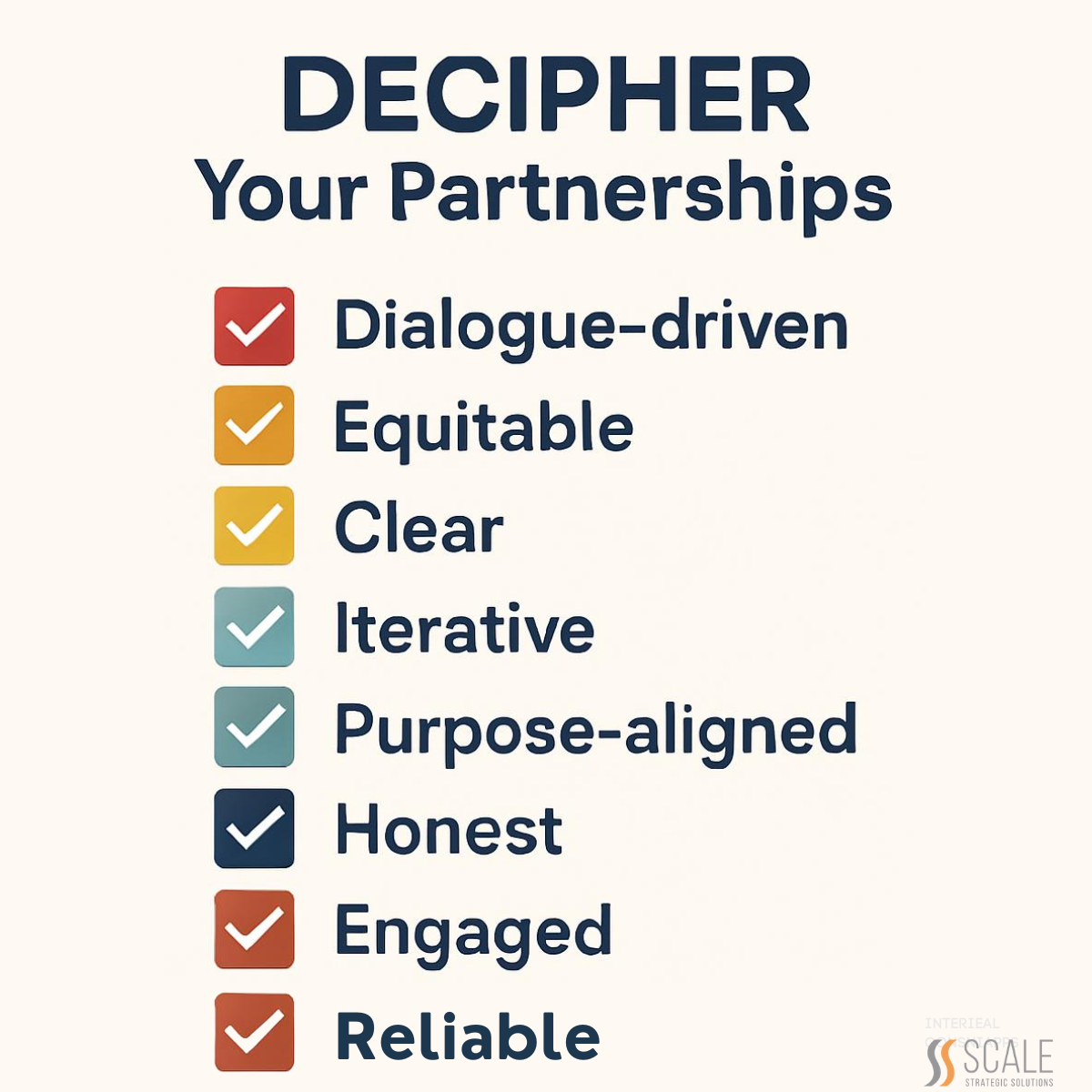
Organizations working in education, health, and social services often face complex challenges. No single group can solve these issues alone. Public agencies, nonprofit organizations, and philanthropy must work together to create lasting impact. Strong collaboration depends on trust. Trust is not automatic. It must be built with intention over time. At Scale Strategic Solutions, we have supported partnerships across sectors. These experiences show that trust is the foundation of effective collaboration. To support this work, we use a simple framework. DECIPHER Your Relationships and Communication This framework helps partners build and maintain trust. D – Dialogue-driven Trust starts with conversation. Partners need open and ongoing communication. Everyone should have a chance to share ideas and concerns. Regular dialogue helps partners stay aligned. E – Equitable Each partner should benefit from the collaboration. Organizations bring different strengths and resources. Fair exchange matters. Respect each partner’s role, capacity, and perspective. C – Clear Clarity prevents confusion. Define roles, responsibilities, and expectations early. Make sure commitments are easy to understand and act on. Clear agreements reduce conflict. I – Iterative Trust builds over time. Start small and follow through. Use feedback to improve the partnership. Learn together and adjust as needed. P – Purpose-aligned Partners need a shared mission. Clear goals keep everyone focused. When challenges arise, shared purpose helps guide decisions. Alignment around outcomes keeps the work moving forward. H – Honest Collaborators must be transparent and truthful with each other. Address challenges early. Set clear boundaries when needed. Honest communication builds respect. E – Engaged Partners must stay actively involved. Engagement means more than attending meetings. It shows commitment to the work and the relationship. The collaboration has to be beyond transactional. R – Reliable All partners need to own and follow through on commitments. Consistency builds confidence. Accountability strengthens the partnership over time. When commitments do not come to fruition, the responsible party assumes ownership and takes corrective action. Partners also balance shared accountability with shared grace. From Principles to Practice Trust building is a practical skill. We must approach it intentionally and consistently. Communication routines, project management practices, and relationship-building opportunities help hone those skills that reinforce the trust. Trust does not happen by chance. It requires effort and consistency. Use the DECIPHER framework to guide your partnerships. Build trust. Strengthen relationships. Create lasting impact.
Woman giving the okay sign in front of people working in the pacground
March 30, 2026
Transforming Skills into Credentials for Career Success
Youth in a group with arms around each other
January 31, 2026
New online, on-demand training available for CEUs
By m.staples87 December 22, 2025
The end of the year invites us to pause, reflect, and appreciate the tools, resources, and rituals that help us do impactful work. At Scale Strategic Solutions, we spend our days turning information into action, supporting businesses as they clarify their vision, understand their impact, and strengthen their systems.
By m.staples87 November 25, 2025
Why Focus Groups Matter: Turning Community Voices Into Action
By m.staples87 October 30, 2025
As organizations navigate times of transition, many are shifting their focus from aggressive growth to sustainable engagement
October 1, 2025
Pathways and the Columbus New Skills Ready Network
August 19, 2025
In today’s data-driven world, local health departments (LHDs) play a critical role in shaping community health and advancing equity. Yet, to do this effectively, they need more than just national trends, they need access to localized, granular data that reflects the real conditions on the ground.  Data sharing is not only a technical challenge but a strategic community-focused practice. When LHDs collaborate with community organizations such as schools, hospitals, social service agencies and law enforcement, they unlock new pathways to address public health challenges more effectively. Local data allows communities to identify emerging health threats, evaluate the impact of programs, and understand how the Social Determinants of Health influence well-being. Scale Strategic Solutions, in partnership with D.E.E.P. Consultants and Strategik513, is proud to announce the development of a robust, strategic roadmap designed to support public health professionals in leveraging data to improve population health outcomes and reduce disparities. Our team of subject matter experts collaborated closely with the National Association of County and City Health Officials (NACCHO) and local health departments to gain firsthand insights into the challenges and opportunities surrounding data sharing practices. This discovery process informed the creation of two key resources aimed at building data capacity in the field. The "Increasing Data Sharing Capacity for Local Health Departments" asynchronous training, alongside the complementary Data Sharing Resource Guide , are now available on NACCHO University , the organization’s online learning platform. At Scale, we are committed to advancing the culture of data sharing within public health ecosystems. These resources were developed to meet practitioners where they are, offering flexible, high-impact tools to drive meaningful improvements in health equity and data-driven decision-making. If your organization is interested in learning more or would benefit from a customized training solution tailored to your specific data sharing needs, we invite you to contact us . Together, we can empower local health leaders with the tools and knowledge needed to transform data into action.
Woman in a college graduation gown with a young child on her hip
July 31, 2025
Pathways for Economic Mobility
Health provider sitting with a woman with a scarf on her head at a table with another woman standing
June 25, 2025
Looking for Replacement for NIH Implicit Bias Training?
More Posts