Making Good Things Happen
Organizations working in education, health, and social services often face complex challenges. No single group can solve these issues alone. Public agencies, nonprofit organizations, and philanthropy must work together to create lasting impact.
Strong collaboration depends on trust. Trust is not automatic. It must be built with intention over time.
At Scale Strategic Solutions, we have supported partnerships across sectors. These experiences show that trust is the foundation of effective collaboration.
To support this work, we use a simple framework.
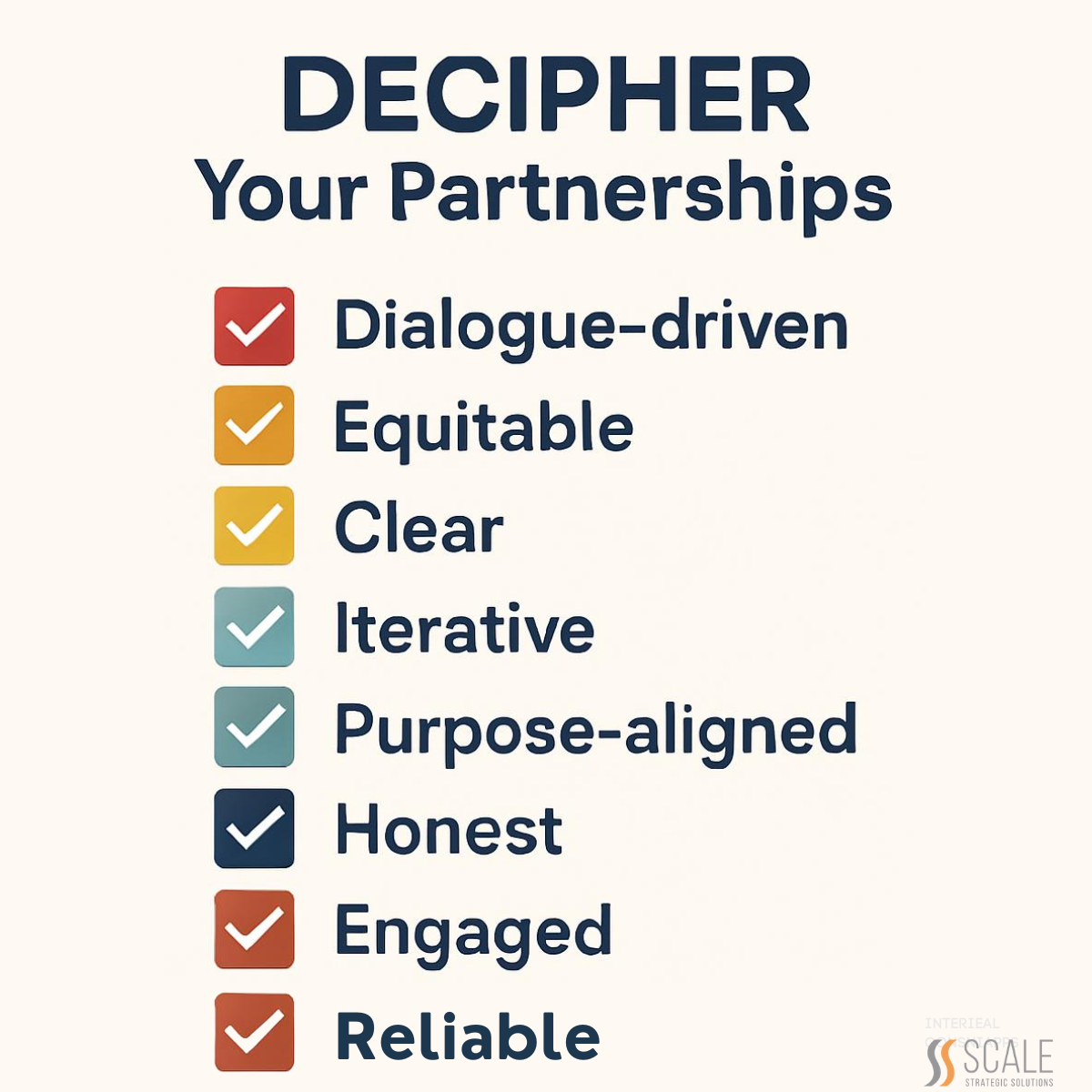
DECIPHER Your Relationships and Communication
This framework helps partners build and maintain trust.
D – Dialogue-driven
Trust starts with conversation. Partners need open and ongoing communication. Everyone should have a chance to share ideas and concerns. Regular dialogue helps partners stay aligned.
E – Equitable
Each partner should benefit from the collaboration. Organizations bring different strengths and resources. Fair exchange matters. Respect each partner’s role, capacity, and perspective.
C – Clear
Clarity prevents confusion. Define roles, responsibilities, and expectations early. Make sure commitments are easy to understand and act on. Clear agreements reduce conflict.
I – Iterative
Trust builds over time. Start small and follow through. Use feedback to improve the partnership. Learn together and adjust as needed.
P – Purpose-aligned
Partners need a shared mission. Clear goals keep everyone focused. When challenges arise, shared purpose helps guide decisions. Alignment around outcomes keeps the work moving forward.
H – Honest
Collaborators must be transparent and truthful with each other. Address challenges early. Set clear boundaries when needed. Honest communication builds respect.
E – Engaged
Partners must stay actively involved. Engagement means more than attending meetings. It shows commitment to the work and the relationship. The collaboration has to be beyond transactional.
R – Reliable
All partners need to own and follow through on commitments. Consistency builds confidence. Accountability strengthens the partnership over time. When commitments do not come to fruition, the responsible party assumes ownership and takes corrective action. Partners also balance shared accountability with shared grace.
From Principles to Practice
Trust building is a practical skill. We must approach it intentionally and consistently. Communication routines, project management practices, and relationship-building opportunities help hone those skills that reinforce the trust.
Trust does not happen by chance. It requires effort and consistency.
Use the DECIPHER framework to guide your partnerships. Build trust. Strengthen relationships. Create lasting impact.